
CATHOLIC CHURCH IN NIGERIA:
Why Igbo People Command the Dominant Population
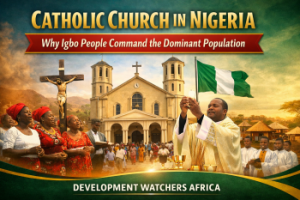
Wherever the Catholic Church is established in Nigeria — from the coastal communities of Bayelsa, the waterways of Delta State, the bustling streets of Lagos, the hills of Jos, to the far northern regions of Katsina, Sokoto and Maiduguri — one pattern is unmistakable: the Igbo people are deeply committed to the Catholic faith.
In the Southeast, nearly every community has at least one parish where Catholicism is more than a religion — it is a way of life. This article examines the historical, cultural, and social factors that have contributed to the enduring dominance of Igbo Catholics in Nigeria, making the Church a central pillar of their identity.
A Brief History of Catholic Mission in Nigeria
Christianity first reached what is now Nigeria through early Portuguese missionaries in the 15th and 16th centuries. However, systematic missionary work only gained momentum in the 19th century. The arrival of the Society of African Missions in Lagos in 1865 marked the start of organised Catholic evangelisation, which gradually expanded into the interior, especially across the Niger River region.
By 1885, missions had been established at Onitsha in Igboland, laying a strong foundation for Catholicism in the Southeast. Over the next decades, schools, churches, and healthcare institutions became vital tools for evangelisation.
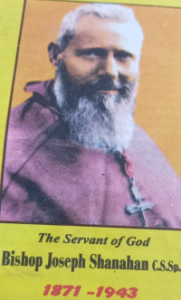
A key figure in this history was Bishop Joseph Shanahan, an Irish Spiritan missionary, who emphasised education as a tool for evangelisation, establishing schools in nearly every village. Indigenous clergy, like John Cross Anyogu, the first Igbo Catholic priest, played an equally important role in rooting Catholicism deeply in the local culture.
Why the Igbo Embraced Catholicism
Education and Social Services as Evangelical Tools
From the beginning, Catholic missions combined religious instruction with practical social services. Catholic schools provided literacy, moral formation, and social mobility, making Church affiliation attractive beyond spiritual reasons. Hospitals and clinics extended care where government services were minimal, creating strong bonds between the Church and local communities.
Cultural Compatibility and Identity Formation
The Igbo worldview emphasises community, spirituality, and moral order, which align closely with Catholic teachings. Missionaries also incorporated local music, language, and cultural expressions into worship, making Catholicism resonate deeply. For the Igbo, the Church became part of their identity rather than a foreign institution.
Missionary Commitment and Persistent Presence
Irish missionaries, especially the Holy Ghost Fathers, invested decades in Igboland, establishing parishes, schools, and training local clergy. Their long-term commitment ensured that Catholicism was passed down across generations, creating an enduring spiritual legacy.
Resilience Through Historical Trials
The Nigerian Civil War (1967–1970) devastated Igboland. Churches became refuges, relief centres, and hubs of community solidarity, further strengthening the Igbo’s attachment to Catholic institutions. Surviving adversity together created a shared spiritual and cultural bond.
Cultural Anchoring Through Festive Life
In Igboland, Catholic celebrations like Christmas go beyond religion. Christmas is a cultural anchor, compelling families to reunite, engage in communal activities, and make important decisions. Churches serve as focal points for family, community, and business meetings, blending faith with social life.
This integration of religion and culture reinforces the Church’s importance in daily life, demonstrating how Catholicism is both spiritual and social in Igbo communities.
The Igbo Catholic Church Today
Igboland remains one of Nigeria’s most Catholic-dominated regions, with archdioceses like Onitsha boasting some of the highest Catholic populations. Igbo Catholics actively participate in education, social outreach, lay organisations, and evangelisation, sustaining the Church’s influence across Nigeria.
The Church is not just a place of worship but a hub of cultural identity, leadership, and community life.
Faith, Culture, and Identity Intertwined
The dominant presence of the Catholic Church among the Igbo people is historically rooted, culturally reinforced, and socially embedded. From missionary efforts that combined faith with education and healthcare, to festive periods like Christmas that unite families and communities, Catholicism is more than a religion — it is a way of life.
Today, Igbo Catholics continue to shape and sustain the Church, spreading faith wherever they go while preserving a unique blend of spirituality, culture, and communal identity.
JODike